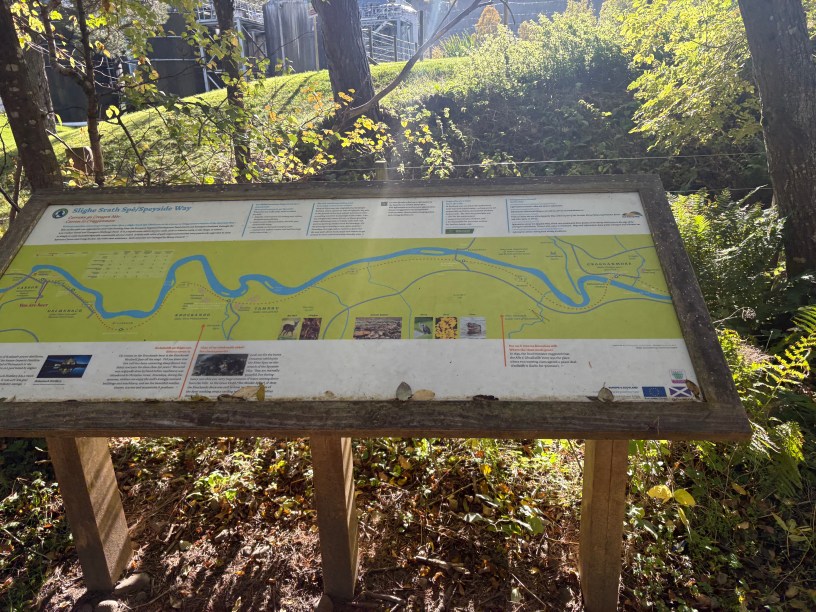
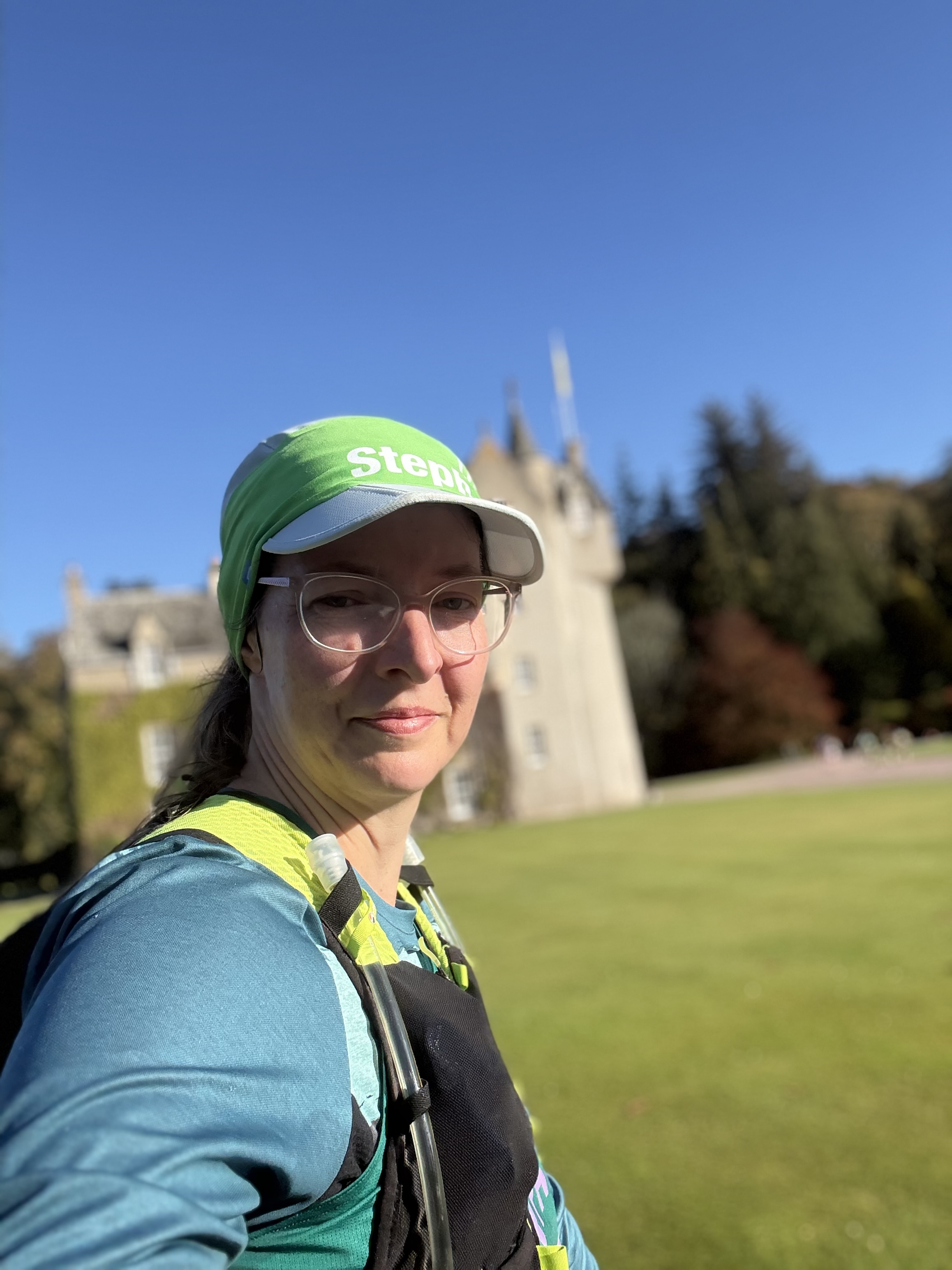
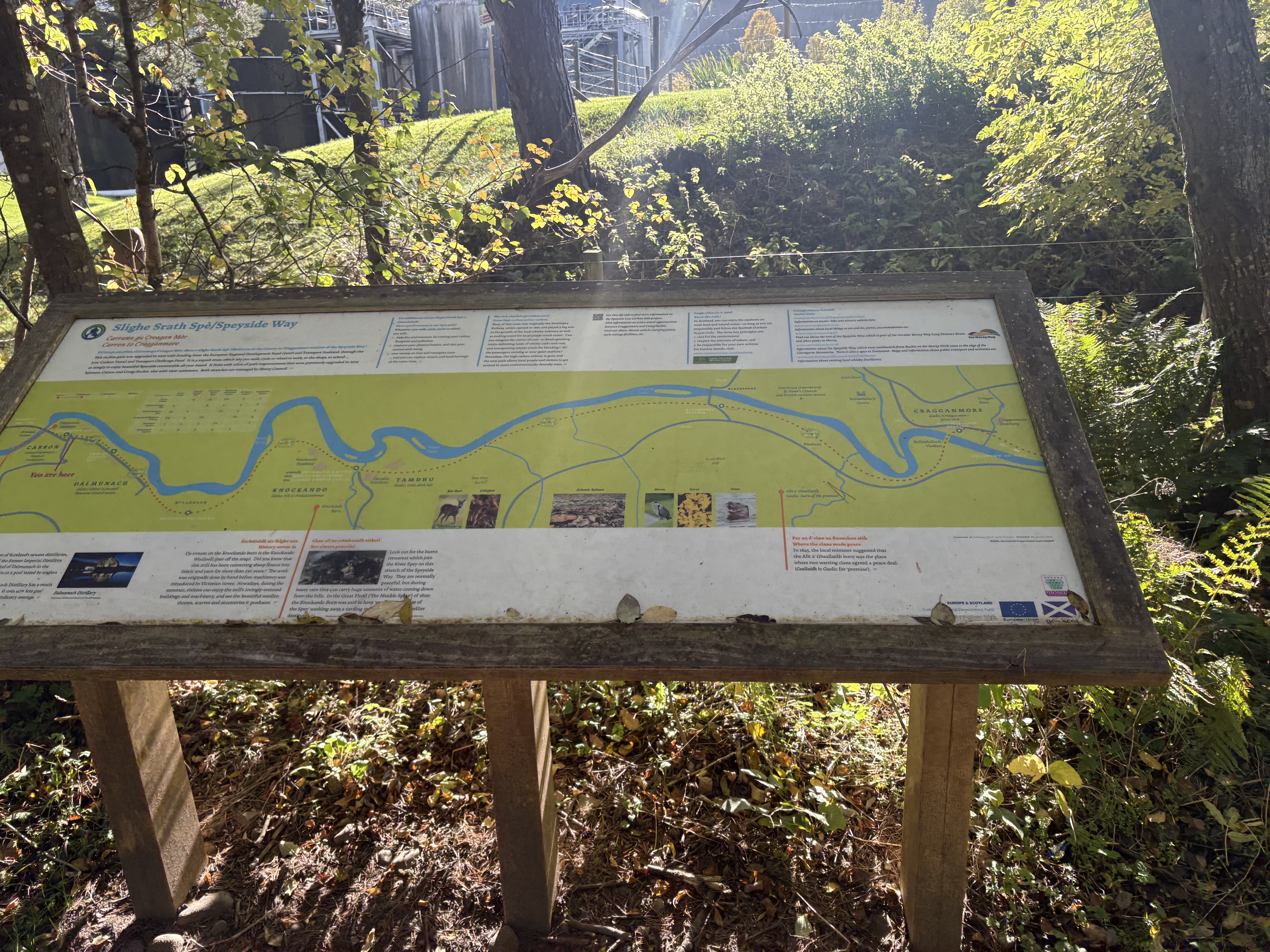
Last Saturday (17th October) I ran the Dramathon: 42km along the Speyside Way, past distilleries and some of the most beautiful scenery Scotland has to offer. I’ll be honest, training did not go to plan. The treadmill I was going to buy to keep my training going through the dark evenings never materialised (because Life), and my longest run was 21km, on the 8th of October. That’s half the distance, just over a week before race day. Not exactly what the training plans recommend.
But I was determined to get to the finish. So I tried something new: run-walking. I ran for 8 minutes and walked for 1, with some flexibility around the terrain and the water stations. My watch beeped to tell me when to walk and when to start running again.
And it worked. Based on my training runs, I’d planned for somewhere between 6 and 6.5 hours. I crossed the finish line in 5:57. Not only did I finish faster than I’d hoped, I also ran some sections in the second half faster than I did five years ago. I’m still a bit surprised by that.
Somewhere around the halfway point (probably during a walk break) I started thinking that there is something in this for academic writing too.
When the preparation doesn’t go to plan
I could have pulled out, or I could have started the way I always do and hoped for the best. Instead I accepted where I was and changed the plan to fit.
Writing projects are the same. The reading took longer than expected, the data arrived late, life happened, or (like me) your health had other ideas. We often carry on with the original plan as if nothing has changed, and then feel terrible when it falls apart. It’s much kinder, and much more effective, to stop and ask: given where I actually am, what plan will get me to the finish?
That might mean a smaller goal for this week, a different order of chapters, or a conversation with your supervisor about what “good enough” looks like. A plan that fits your reality beats a perfect plan you can’t follow.
Pre-planned breaks keep the momentum going
This was the big surprise for me. I always thought of walking during a marathon as a sign that things had gone wrong. When the breaks are planned, though, they’re part of the strategy. I wasn’t walking because I’d run out of energy. I was walking so I wouldn’t run out of energy.
The beeps really helped too. I didn’t have to decide when to stop or when to start again, because the watch did that for me. One less decision means more energy for the running. Getting going again after each walk was much easier because I knew another break was only 8 minutes away.
If you’ve joined a Power Hour of Writing, you’ll know where I’m going with this. A set block of focused time, followed by a planned break and a check-in, is so much easier to start than an open-ended “I’ll write all afternoon”. Knowing the end is coming makes it easier to begin, and a break you’ve planned is very different from one where you just wander off and end up scrolling.
Some ideas to try:
- Set a timer for your writing block and a short break, and let the timer make the decision for you
- Decide on your break before you start: a walk, a cuppa, a stretch. Anything except email!
- Join a writing group or a Power Hour so someone else holds the structure for you
Adjust for the terrain
I didn’t stick rigidly to 8:1. On steep climbs I walked early, on lovely flat stretches I kept running a bit longer, and I always took my walk breaks at the water stations.
Writing has terrain too. Some sections flow, and others feel like climbing a hill in the rain. Your literature review synthesis or discussion chapter might need shorter blocks and more frequent breaks, while editing or formatting references might happily fill a longer stretch. The structure is there to support you, so let it bend when the terrain changes.
Pacing early pays off later
The thing I’m most proud of is the second half. In the past I’ve gone out too fast and paid for it from about 30km. This time the planned walk breaks in the first half meant I still had something left when it mattered.
Thesis writing and big writing projects are marathons, not sprints (sorry, I had to). Regular, sustainable writing with planned rest is far more likely to get you to submission than a few heroic all-nighters followed by burnout. Your future self, the one writing the final chapter, will thank you.
What comes after the finish line
For the winter break, I’m not signing up for the next big thing. Instead, I’m keeping my running going with Parkrun and regular short runs, and finally putting a strength plan in place. Less glamorous than a marathon, but it’s the foundation that makes the next one possible.
Writing works the same way. After a big deadline, it’s tempting to either stop writing altogether or jump straight into the next project. Short, regular sessions keep the habit alive, and quieter periods are a great time to build your strength: work on your editing, sort out your note-taking system, or read more widely. Your next big writing project will thank you for it.
Finishing is the goal (and sometimes you surprise yourself)
My goal on Saturday wasn’t a personal best. It was to get to the finish line. I did, and in under six hours. I fully expected the walk breaks to slow me down. Instead they kept me going at a steady pace for longer, and that added up to a faster finish.
With hindsight, letting go of how I should run it was what let me run it well. Writing works the same way. Stopping for planned breaks can feel like losing time, but steady progress usually gets you further than pushing on until you have nothing left.
So if your writing preparation hasn’t gone to plan, you haven’t failed. It’s time to change the strategy. Plan your breaks, listen for the beeps and keep moving forward. You might just surprise yourself.
A massive thank you to everyone who supported my fundraising for Shift.ms. It meant so much to have you all with me along the Speyside Way.
Have you ever tried planned breaks in your writing? What helps you get going again when the momentum dips? Let me know in the comments.

