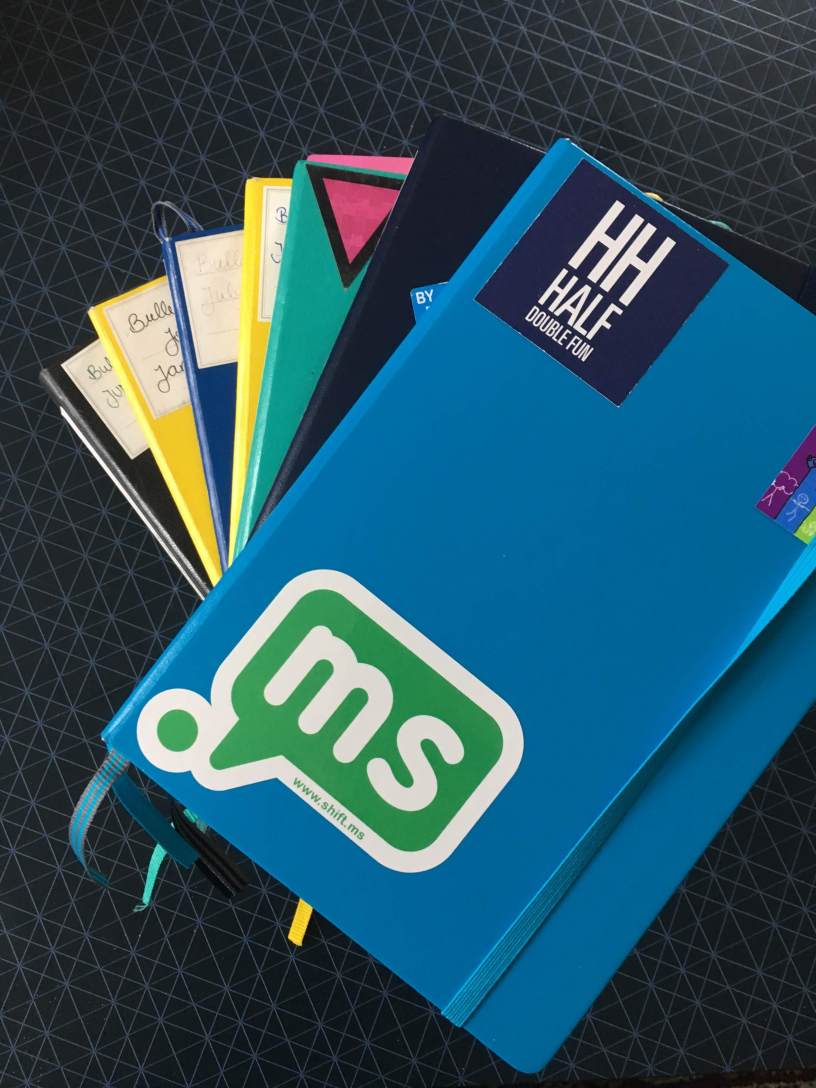
I can’t quite believe I’m writing this, but I’ve been using a bullet journal for almost 10 years. That’s 17 paper journals (I think), countless layout iterations, one stint with digital, and more life changes than I could have predicted when I started in June 2016.
The Beginning: Overwhelmed and Drowning in Notebooks
When I started my first bullet journal in June 2016, I was a postdoc at Heriot-Watt dealing with an absolutely ridiculous notebook situation. I had one major notebook with five subsections, plus seven other notebooks for various aspects of my work – reading notes, conferences, seminars, training, lab work, outreach, and EGU. Seven. No wonder I couldn’t find anything.
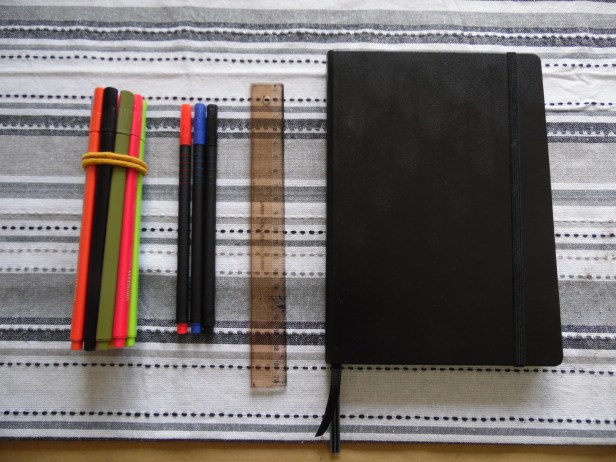
I’d come across bullet journaling before but dismissed it as too difficult for academics. Turns out, I was wrong. The flexibility of the system – the ability to adapt it to my needs without worrying if I was doing it “right” – was exactly what I needed. I bought a Leuchtturm 1917 A5 dotted notebook (which I used a lot but have since changed to Dingbats), grabbed some fine tip pens, and jumped in.
Finding My Feet (2016-2017)
Those first few weeks were all about experimentation. I tried different weekly layouts – two weeks per double page, a Dutch door setup, daily logs – before settling on what worked. The weekly spread quickly became my anchor. Having to plan my week and break down those overwhelming to-do lists into actual achievable daily tasks was transformative. I finally stopped feeling like I was drowning.
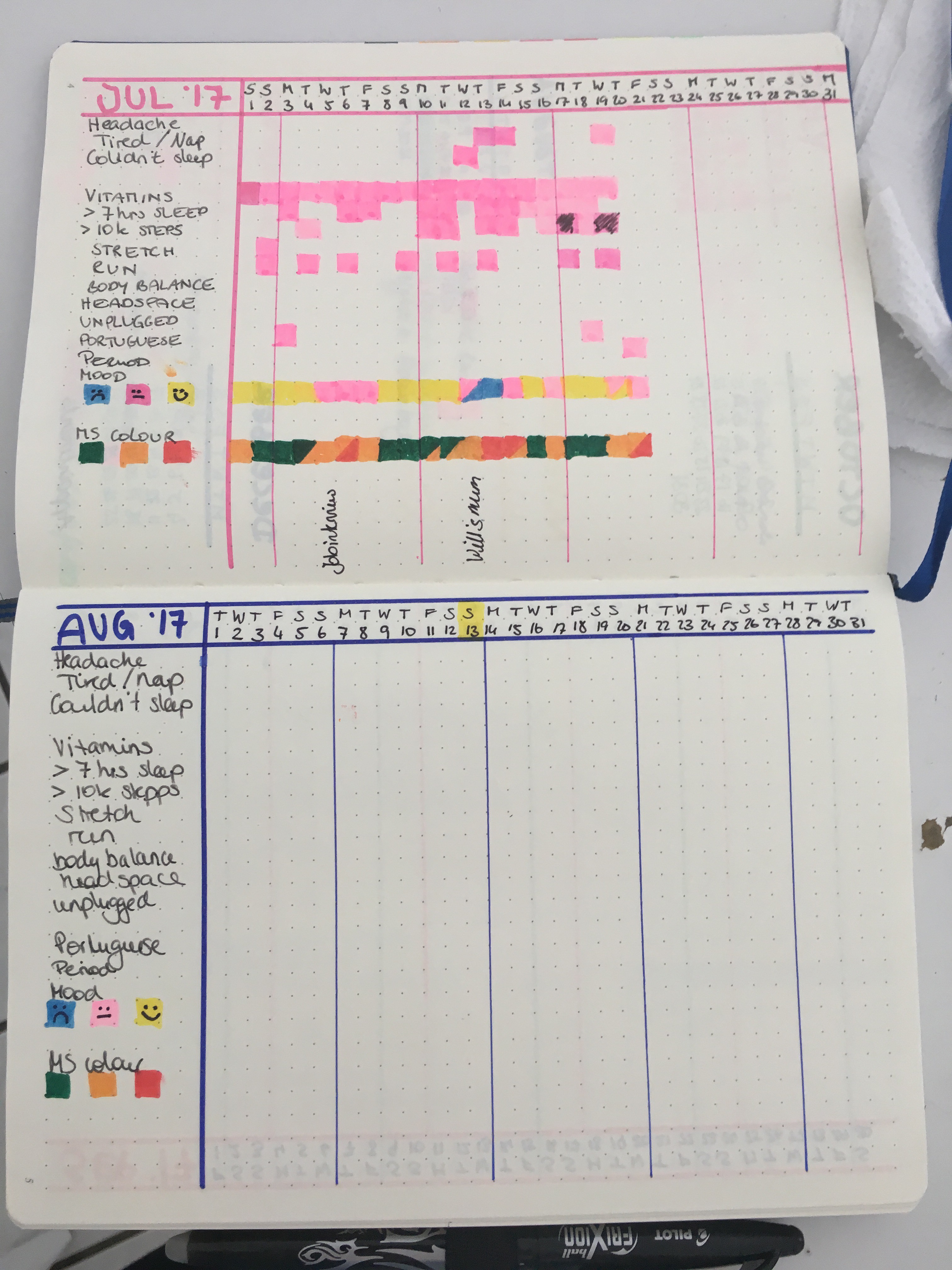
I also started tracking things. My MS neurologist suggested I use the MS Impact Scale (MS-IS-29) monthly, and adding it to my bullet journal meant I actually did it. I started a running log to keep me motivated after starting to run again post-diagnosis. These trackers became some of the most valuable pages in my journals.
What didn’t work? Daily logs – too much duplication with my weekly spread. A reading tracker in my main journal – it made more sense to keep it with my reading notes. The beauty of the bullet journal system is that you can dump what doesn’t serve you.
Evolution and Life Changes (2017-2019)
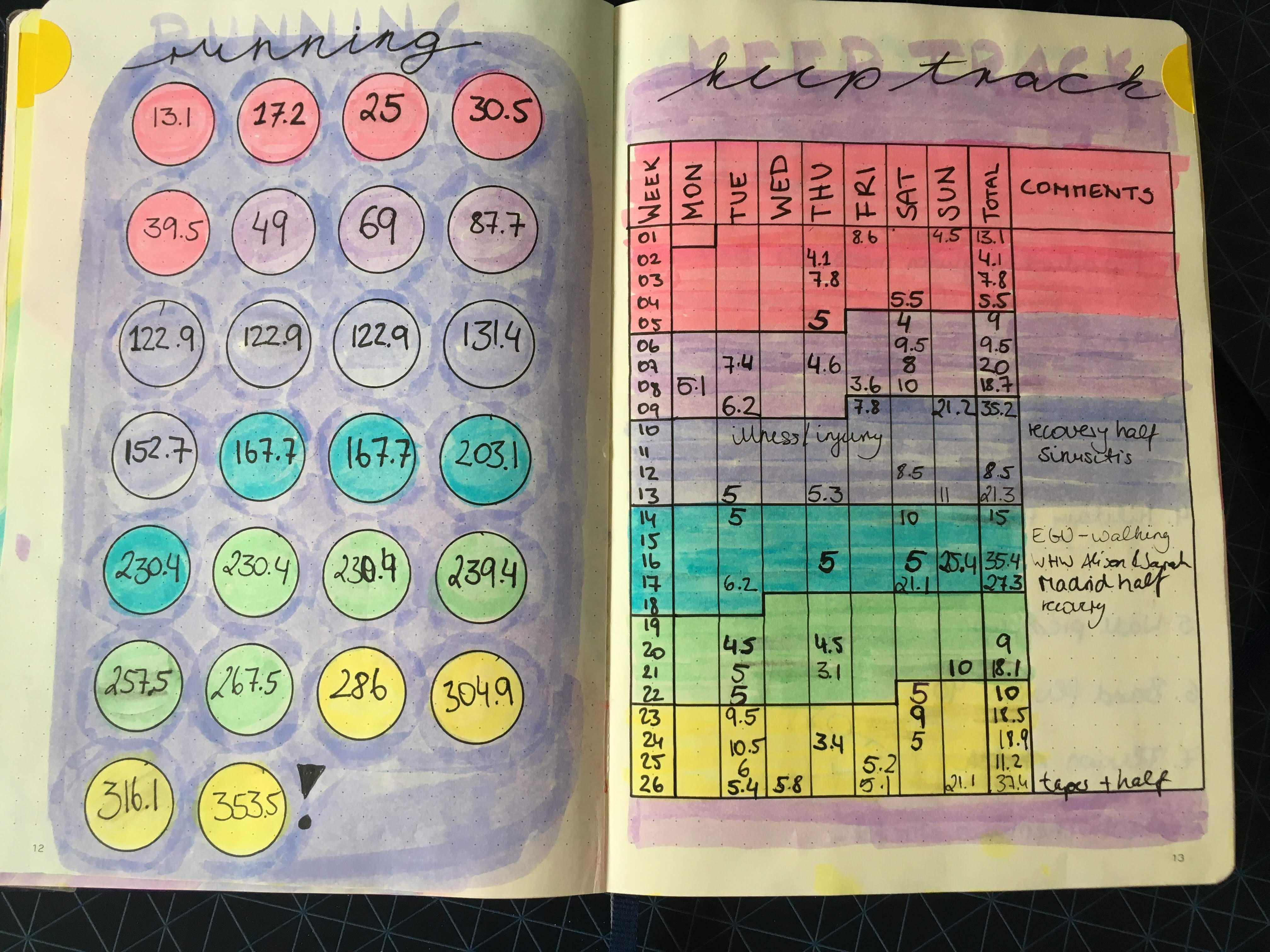
Over the next few years, the journal evolved with me. I settled into a six-month cycle – each journal lasting from January to June or July to December. This rhythm worked well, allowing me to have all my monthly trackers and running logs at the start for easy comparison.
My layouts became more refined. The weekly spread that I only changed recently emerged around March 2019 – weekdays in the middle with room for time blocking, notes, to-do lists, and trackers on either side. It sounds busy but somehow it just works.
I added new elements as my life required them: a commitment inventory after doing the ToDoist productivity quiz, an “ideal week” breakdown to help manage my chronic illness, a “Say No” checklist to protect my time and energy. Some things stuck, others didn’t. I tried multiple writing trackers over the years – most failed because I wasn’t consistent. That’s fine. The journal adapted.
The Career Change Factor (2018-2021)
When I moved into researcher development in 2018, my bullet journal came with me. It helped me navigate the transition, kept me organised through a new role, and was there through some difficult times – including our manager’s unexpected death in 2020 and working through the pandemic isolation.
The Power Hour of Writing community I helped build during this time became my “happy project” – and of course, I tracked those sessions in my journal. By this point, my bullet journal had become more than just an organisational tool; it was a record of my professional and personal growth, a place to reflect, and increasingly, a mental health support.
The Digital Experiment (2021-2023)
In October 2021, after five years of paper journalling, I decided to give digital a proper go. Three main reasons: longer-term searchable notes, no page limits, and wanting to make better use of my iPad.
I created my own basic template in Apple Keynote with hyperlinks, started using GoodNotes 5 with an Apple Pencil, and transitioned fully digital. And you know what? I loved parts of it. The ability to add links, photos, and stickers was brilliant. The searchability was fantastic. Being able to share pages with colleagues was genuinely useful.
The big change for me in the digital setup was adding daily logs. Without page limits, I could finally plan just one day at a time rather than seeing the whole overwhelming week at once. That shift in focus made a massive difference.
Back to Paper (2023)
But here’s the thing – when I changed jobs in March 2023 and joined GCU, I found myself drawn back to paper. There’s something about the tactile experience, the ritual of setting up a new week, the complete absence of notifications and distractions when I’m planning.
I moved back to paper and, interestingly, kept some of the lessons from digital. I’m back to numbering pages so I can reference them in my digital task manager. It’s become a hybrid system that takes the best of both worlds.
Where I Am Now (2026)
My current setup has continued to evolve. I’ve switched from Leuchtturm to Dingbats journals – they have a brilliant index system and a pre-scored annual planner at the start which saves time. After nearly 10 years of tracking everything in my journal, most of that has migrated to apps now. It’s more efficient, and honestly, I don’t need the visual motivation in the same way anymore.
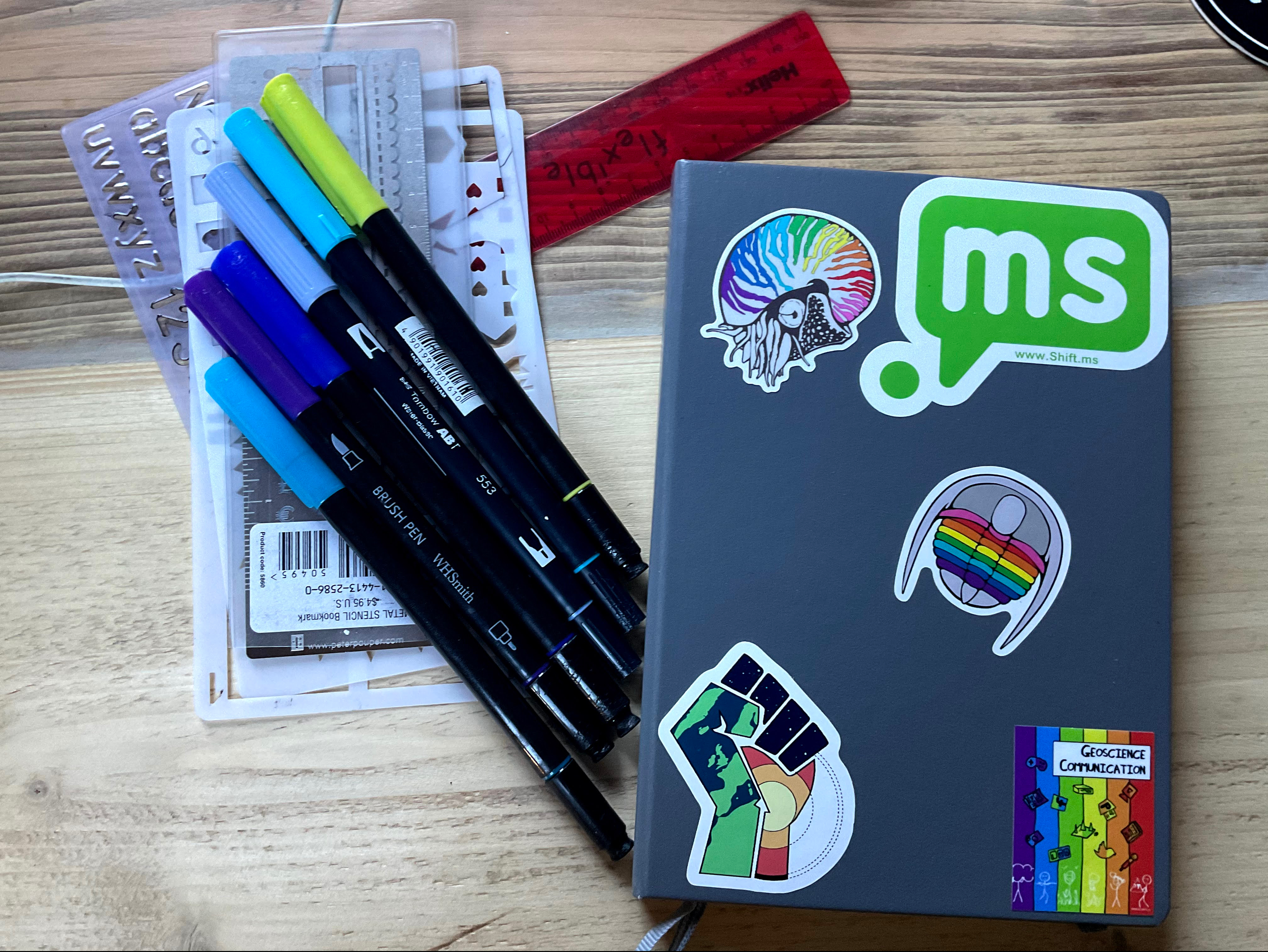
What’s stayed? My monthly and weekly logs – they’re still the backbone of my planning. But I’ve made them easier to maintain by investing in some stencils from Oops a Daisy. After years of hand-drawing layouts, I’ve given myself permission to speed up the process. It still feels like my journal, but without the time investment that sometimes became a form of procrastination.
I’ve also added a running to-do list at the start of my journal. This has been a game-changer for meetings. I can quickly capture tasks as they come up, then later add them to Outlook ToDo for proper scheduling rather than trying to process everything in the moment. It’s that classic bullet journal rapid logging, but now it feeds into my digital calendar rather than staying on paper.
There’s also some project space at the start that I’m still figuring out how to use. That’s very on-brand for bullet journaling – adding something because it feels right, then discovering its purpose as you go along.
What’s Stayed Constant
Despite all these changes, some elements have remained throughout almost 10 years:
- The six-month cycle – still going strong
- Monthly and weekly spreads – the layouts have changed but I still need both
- The principle of rapid logging and migration
- The flexibility to adapt without guilt
- A good index system – whether coloured dots or the Dingbats setup
What I’ve Learned
The bullet journal system has taught me so much about myself over these almost 10 years:
Flexibility is essential. A system that can’t evolve with you will eventually fail. My journal has adapted through postdoc to researcher developer, through diagnosis and treatment, through pandemic and career changes, through digital and back to paper, and from tracking everything to tracking what actually matters.
Perfect is the enemy of done. I started with hand-drawn everything. Now I use stencils. Both are valid. The journal does its job either way.
Paper and digital can coexist. My system now is genuinely hybrid – paper for planning and thinking, digital for tracking and task management. I don’t have to choose.
Less can be more. Dropping the trackers that had migrated to apps freed up mental space and pages for what the journal does best – helping me think and plan.
Weekly planning changed everything. Moving from endless to-do lists to realistic weekly planning was probably the single biggest shift in my productivity and wellbeing, and it’s the one thing that’s never changed.
Tools matter, but not as much as the system. Whether it’s Leuchtturm or Dingbats, hand-drawn or stencilled, the principles of the bullet journal system – rapid logging, migration, reflection, adaptation – are what really work.
Looking Ahead
As I approach 10 years of bullet journalling, I’m sure the system will continue to evolve. Maybe I’ll finally figure out how to use that project space. Maybe I’ll discover new ways to integrate paper and digital. Maybe something entirely new will emerge that I can’t predict right now.
What I do know is that this flexible, adaptable system has been with me through some of the most significant changes of my adult life. It helped me cope with an MS diagnosis, supported a career change, provided structure during pandemic chaos, and continues to help me balance competing demands while protecting time for what matters.
If you’re thinking about starting a bullet journal, or if you’ve tried it before and it didn’t quite work, here’s my advice: start simple, adapt ruthlessly, and don’t worry about doing it “right”. The only right way is the way that works for you. And that will probably change – and that’s exactly as it should be.
What’s your planning system? I’d love to know how you keep track of all the things.
 Stephanie G Zihms, PhD